 happybride
 Every wedding guest will interact with the tableware, use it to eat, and look at it throughout their meal. However, a couple will choose the florist, entertainment and other big design items before considering plates, flatware, and glassware. Tableware is one of the few design elements every guest will interact with and is a common feature in reception photography.
The Tablescape Is a Structural Layer, Not a Garnish
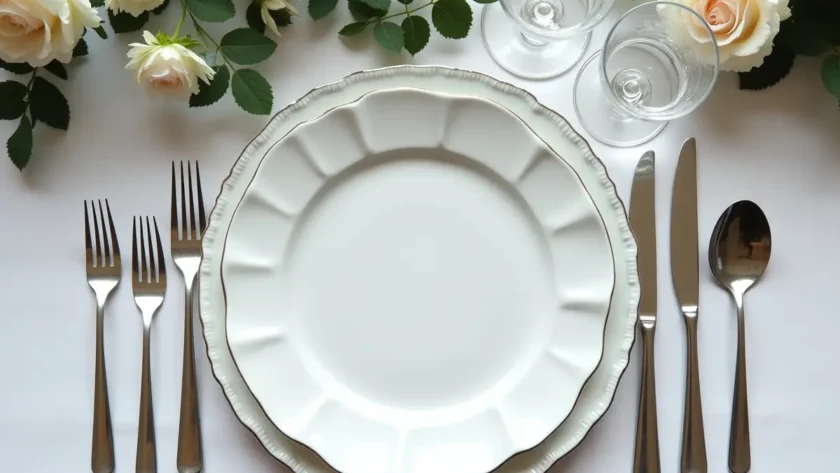
A tablescape comprises the whole table setting and includes all of the linens, dinnerware, flatware, glassware, centerpieces, and decorating. The plates, chargers, cutlery, and glasses make up the base that everything else needs to complement.
If the plate and cutlery feel cheap or disjointed with the rest of the design, the big investment in flowers will not hide it. A low centerpiece leaves the plate and glassware exposed while a tall centerpiece still places the dinnerware at eye level or in the center of photos taken throughout the table.
The color of the tableware can also help bring a wedding palette into a reception without requiring a big addition in flowers or linens. Placing a color into the charger, using a metallic edge, or coordinating the napkins to the larger design can all echo the wider wedding scheme in an easily repeated element.
Where Cheap Disposables Fail
The problem is not disposable dinnerware but cheap disposable dinnerware. Thin plastic that bends when a warm entrée is placed on it will make even the sturdiest setting feel cheap.
The catering style will affect the best choice of disposable dinnerware. A self-serve line will require a sturdier plate while a plated dinner allows more attention to the cutlery when guests are seated for multiple courses. The cocktail hour is more informal and requires smaller pieces that people can pick up and hold.
The serving style is just as important to the tableware choice as the visual requirements. Heavier meals or those with sauces or requiring cutting demand more from a plate than cake, canapés, or a first course. Considering the practical needs of the plate while matching aesthetics will deliver a better reception than simply looking at whether a place setting looks formal enough.
Rental China Can Bring Extra Logistics
Rental china can be a great choice when hosting a formal wedding but can require extra logistics. These need to fit into the venue schedule with delivery and pickup dates and may require replacement payments if a piece is damaged or broken.
Premium disposable dinnerware provides a great alternative for those who want a formal place setting without extra cleaning or washing. Buying instead of renting means there are no delivery and collection dates to consider alongside venue availability. Brands such as bymadee.com can offer stylish disposable place settings without the worry of a deposit or the return logistics for a rental service. This is a great alternative for those who want an elevated appearance, logistical ease, and guest comfort.
The Budget Math Can Favor Better Tableware
According to The Knot’s 2023 Real Weddings Study, the average US wedding ceremony and reception cost $35,000. Compared to a wide range of budget areas for a wedding such as the venue, catering, photography, flowers, and entertainment, an updated place setting can be an easy and contained upgrade.
It does not mean choosing the most expensive option but determining whether the tableware requirements fit with the menu, formality, and ability to match the wider reception design. An improved plate, glassware, charger, or cutlery will fulfill all three requirements without adding another category into the wedding budget.
In addition, the extra cost of a premium place setting can be measured per guest instead of as an overall cost. Comparing the visual benefits and practical improvements of upgraded disposable place settings, additional cutlery options, or better-quality linens can be more straightforward when viewed on a per-guest basis.
Consistency Across the Wedding Weekend
It is likely that a table setting will appear at more than one event over the wedding weekend, from a bridal shower and welcome dinner to the wedding reception and post-wedding brunch. Each setting does not need to be identical but can reflect a commonality in color, finish, or formality to appear connected without repeating the same presentation.
The repetition of one or two elements can create cohesiveness across the larger wedding weekend without overwhelming the guest with identical settings at every meal.
The Plate Is the Silent Host
Few couples will organize a wedding around the dinnerware, but every guest will engage with it throughout their reception or during their seated meal. It holds the meal, provides a base for styling, and sits within many small details that create the considered appearance of a room. Considering the placement and design of the tableware creates a reception that performs on both aesthetic and functional levels.